
Get A quote
Leave Your Message

File Upload (If you’re encountering any issues with your submission, please email us directly at customerservice@psiextrusions.com)

Blog

Why Choose Aluminium Parts for Manufacturing?

Why Choose Aluminium Parts for Manufacturing?

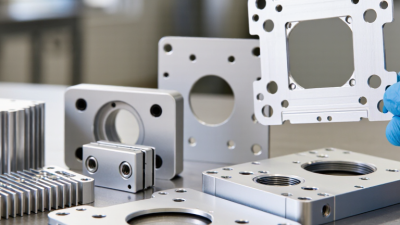
You’ll see Aluminium Parts pop up a lot when a design needs low weight, corrosion resistance, and efficient production. And those benefits aren’t just on paper—they show up in real, practical ways. A lighter bracket, for instance, can trim overall assembly weight, while a machined housing helps dissipate heat and keep precise dimensions. That said, aluminium isn’t automatically the right choice. Honestly, the alloy you pick, how it's tempered, the wall thickness, and even the finish—they all play a role in both performance and cost. You know, recycling aluminium is pretty incredible—the International Aluminium Institute says it only takes about 5% of the energy you'd need to make the stuff from scratch. That said, their lifecycle research reminds us that recyclability isn't automatically a win; it really depends on how the supply chain works and how much recycled content actually makes it in. And just to put things in perspective, the U.S. Geological Survey’s Mineral Commodity Summaries 2024 figures suggest we produced around 70 million metric tons of primary aluminium globally in 2023. I mean, that scale really just shows how widely aluminium is used across industries — it’s not like it proves every single application actually benefits from it. Materials scientist Michael F. Ashby once put it nicely: 'Materials are the stuff of design.' What that really means for manufacturers? It’s about pitting aluminium against other options based on actual needs—load, operating temp, corrosion exposure, tolerances, and how much the part costs overall. Sure, a thin aluminium panel might be a breeze to form, but add a threaded feature and you’ve got to think carefully about wear resistance. It’s the little things that end up making a big difference. So, this guide is all about aluminum parts—where they really shine, how the usual manufacturing methods actually shape them, and the trade-offs you'll want to keep an eye on. It's a solid choice, don't get me wrong, but it's not exactly effortless. Get the engineering right, and it pays off.
Read more »
Sophia By:Sophia - November 7, 2026
How to Choose the Right Extruded Profiles in 2026?

How to Choose the Right Extruded Profiles in 2026?

So, picking extruded profiles in 2026? It’s not just flipping through a catalogue and grabbing an alloy. Honestly, a solar panel frame, a sliding-door track, and a heat sink each deal with completely different loads, tolerances, and environments. Grand View Research pegged the global aluminum extrusion market at around USD 87.84 billion in 2023, and they see it growing through 2030. That kind of scale gives you plenty of options—but also more ways to end up with a costly mismatch. And just because a profile is popular doesn't mean it's the right fit for your specific application. Before you even think about materials, ask yourself: what's this section actually supposed to do? Then nail down the basics—alloy and temper, which way the load's coming from, wall thickness, tolerances, finish, corrosion exposure, and roughly how many parts you'll be making. Oh, and don't finalize the drawing until you've double-checked the supplier's press capacity and tooling limits. There's a principle from Professor Michael F. Ashby's materials-selection approach that I've always found useful: translate the design brief into clear constraints and objectives before you start comparing materials. You know, the International Aluminium Institute says recycling aluminum takes roughly 95% less energy than making it from scratch. That's a huge difference, so it's definitely something worth bringing up with your suppliers. That said, just because a product has recycled content doesn't automatically mean it'll perform or look the way you need it to. Honestly, there’s no single “best” profile out there. You can have a shape that looks flawless in CAD, but it can still be a nightmare to extrude, machine, or put together. So get a manufacturability review, order some sample parts, and don’t just eyeball them—check the fit with a caliper and try them out in conditions close to the real ones. One thing people often overlook: even a small tweak in wall thickness can change both the weight and how consistently it comes off the line. In the end, the right option is whatever works reliably for your application—not just whatever has the lowest number on the quote.
Read more »
Sophia By:Sophia - November 2, 2026
10 Tips for Sourcing Aluminum Extrusion Parts

10 Tips for Sourcing Aluminum Extrusion Parts

Honestly, sourcing aluminum extrusion parts isn’t just about comparing prices. You’d think a profile that looks simple on paper is straightforward, but the alloy, temper, wall thickness, tolerance, and finishing can all change the game. Miss one tiny detail, and boom — your whole production run could need costly fixes. It’s pretty wild when you look at the numbers—why sourcing carefully actually matters. The U.S. Department of Energy says recycling aluminum can use something like 95% less energy than making it from scratch. So yeah, that’s a big deal. It’s definitely worth bringing up recycled content with suppliers, not to mention alloy consistency and traceability. And there’s also the International Aluminium Institute’s report—Aluminium Sector Greenhouse Gas Pathways to 2050—which digs into the emissions challenge the industry is facing. Look, these sources aren’t a substitute for doing your own supplier checks—but they can add some useful context when you’re weighing a purchase. A capable supplier should be able to explain their die design, minimum order quantities, sample approval, quality controls, and realistic lead times. Ask them directly how they measure critical dimensions, handle surface defects, and document material batches. Request evidence, not just assurances. Because honestly, the details are what decide. Look, price still matters—of course it does. But a rock-bottom quote? It can hide extra charges for machining, packaging, or freight. So compare the total delivered cost, and make sure you know who actually owns the extrusion die. No checklist is perfect. Sometimes supplier communication just falls apart at handoff, and that’s definitely worth a second look. The ten tips ahead give you a practical way to vet suppliers, dodge avoidable surprises, and pick parts that work both on paper and on the production floor.
Read more »
Isabella By:Isabella - October 29, 2026
2026 Top Extruded Aluminum Bars Suppliers for Global Buyers

2026 Top Extruded Aluminum Bars Suppliers for Global Buyers

Honestly, by 2026, global buyers won't get far with just a long supplier list. What they really need are dependable Extruded Aluminum Bars—ones with stable dimensions, verified alloys, and delivery you can actually count on. A supplier worth trusting should be clear about where its billets come from, how much extrusion capacity it has, what alloys and tempers it offers, and how it inspects the final product. Yep, the little details really do matter. Dr. J. Gilbert Kaufman—pretty well respected in the aluminum world—once wrote that “the performance of aluminum depends on composition, processing, and application.” And honestly? That idea still shapes how serious buyers make decisions today. If you're choosing between 6061, 6063, and 6082 alloys, it pays to compare them closely. They each fit different needs, whether it's construction, machinery, transportation, or industrial fabrication. And don't forget surface finish—it really matters, especially if you're planning on anodizing or using it in architectural applications. Honestly, it doesn’t take much—just a small variation here or there—and next thing you know, you’re dealing with production problems that can get pretty costly. So, this guide is basically a rundown of the 2026 top extruded aluminum bar suppliers for global buyers. We look at things like technical experience, export readiness, certifications, packaging quality, lead times, and communication. A really solid supplier? They'll give you mill test certificates, dimensional reports, and batch info you can actually trace. They also understand the regional documentation hoops and the shipping risks involved. And a slick website? That doesn't prove they're strong at manufacturing. That's the risk, honestly. You'll often see suppliers with lower prices, but their consistency might not be great. Then there are others who deliver excellent quality, though the lead times can run longer. So buyers have to weigh that trade-off. Factory audits, sample testing, and clear specs? Still worth doing. But honestly, even that isn't foolproof. Market conditions can shift fast, and you really need to verify what a supplier claims before placing any large orders.
Read more »
Sophia By:Sophia - October 25, 2026
What Is the Best Aluminum T Slot Channel from China?

What Is the Best Aluminum T Slot Channel from China?

Choosing the best Aluminum T Slot Channel from China requires more than comparing prices or profile photos. Buyers should examine alloy, temper, dimensional tolerance, slot accuracy, surface treatment, and supplier traceability. A 2024 Grand View Research report valued the global aluminum extrusion market at more than USD 80 billion. It also identified construction, transport, and industrial automation as major demand sectors. These trends support China’s strong manufacturing position, but they do not guarantee consistent quality. Small details matter. A 40 × 40 millimeter profile should hold its geometry along the full length. The slot must accept standard T-nuts without excessive play. Anodizing should look uniform under workshop lighting. Ask for mill certificates, inspection records, and sample measurements. Aluminum Extruders Council guidance also stresses that profile design should consider function, load, and manufacturability. As extrusion specialist Jeff Henderson has stated, “Good extrusion design begins with the application, not the profile catalog.” That principle is easy to overlook. The International Aluminium Institute reported that aluminum production creates substantial greenhouse-gas emissions, making recycled content and renewable-energy sourcing increasingly important. A responsible Chinese supplier should disclose alloy origin, recycled percentage, packaging methods, and quality controls. ISO 9001 certification can help, but certification alone is not proof of practical consistency. Request a trial order. There is no perfect channel. This introduction will compare Chinese manufacturers through engineering evidence, not marketing language. It will consider 6063-T5 and 6063-T6 options, anodized finishes, cutting accuracy, custom dies, lead times, and after-sales support. Some supplier claims may remain difficult to verify. That uncertainty deserves honest attention.
Read more »
Madeline By:Madeline - October 20, 2026
7 Best Aluminum Extrusion Dies for Global Buyers?

7 Best Aluminum Extrusion Dies for Global Buyers?

Global buyers usually don’t pick an extrusion die based on price alone—not if they want reliable results. Instead, they look at things like profile complexity, alloy, press capacity, surface finish, tool steel, and how much they expect to produce. Aluminum Extrusion Dies also have to hold up through repeated heating, cooling, polishing, and correction. And honestly, small design mistakes can show up as die lines, uneven wall thickness, or way too much scrap. Industry data backs up why this choice matters. The International Aluminium Institute said global primary aluminium production topped 70 million tonnes in 2023. Demand keeps growing across construction, transport, solar systems, and industrial equipment. The Aluminum Association also calls extrusion a major value-adding process for lightweight structural components. But more production doesn’t automatically mean every die performs the same. That’s a risky assumption. So this guide looks at seven commonly used die options for international purchasing teams. We’re talking solid dies, hollow dies, semi-hollow dies, bridge dies, porthole dies, adjustable dies, and custom precision dies. Each one fits different profile shapes and operating conditions. A hollow die might be the right fit for a complex window frame, while a solid die can handle a simpler flat bar with fewer welding risks. Supplier experience matters here. Traceability does, too. Reports from CRU and S&P Global Commodity Insights often point to pressure on aluminium costs, energy use, and supply-chain reliability. That means buyers need more than just a nice-looking quotation. They need dimensional control, documented heat treatment, trial samples, repair support, and delivery schedules that are actually realistic. No ranking gets it perfect. Die performance depends a lot on the press, billet temperature, lubrication, and operator skill. Those practical limits are what shape the comparison below for global buyers looking for reliable Aluminum Extrusion Dies.
Read more »
Sophia By:Sophia - October 13, 2026
China Top Aluminum T Slot Channel Manufacturer?

China Top Aluminum T Slot Channel Manufacturer?

Choosing the China Top Aluminum T Slot Channel manufacturer? It’s not just about lining up catalog prices. You’ve got to look at extrusion experience, alloy control, slot accuracy, surface finishing, and how consistent production really is. A supplier worth trusting should be able to explain, clearly, why they choose 6063-T5 aluminum. And they should hand over inspection records, die-development details, and quality documents you can actually trace. Daniel Li, an aluminum extrusion consultant, puts it this way: “A precise slot is not a luxury; it determines whether the whole frame assembles smoothly.” That’s not just a nice line — it matters on a busy workshop floor. If the channel is poorly formed, T-nuts can stick, brackets can shift, or machine guards end up sitting unevenly. Small mistakes get expensive fast during installation. And sometimes the sample looks great, but the bulk order? Not so much. That risk deserves honest attention. This outline compares Chinese manufacturers using practical evidence, not flashy claims. It looks at profile tolerances, anodized coating thickness, cutting accuracy, packaging methods, and how quickly they respond. It also asks whether a factory can handle custom lengths, reinforced profiles, and repeat orders. Certifications help, sure — but paperwork alone can’t prove dependable production. So ask for recent samples. Measure them with calipers. Test the slot with the actual fasteners you’ll use. A strong manufacturer should welcome technical questions. They should be comfortable talking about die wear, extrusion temperature, cooling control, and quality checkpoints. Pricing still matters, of course. But the cheapest offer might be hiding inconsistent dimensions or weak packaging. This guide also looks at communication, lead times, and after-sales support. China has plenty of capable suppliers, but “top” really depends on your application. That conclusion is less convenient, yeah — but more accurate.
Read more »
Madeline By:Madeline - October 10, 2026
Top 10 Aluminum Panel Extrusions for Global Buyers

Top 10 Aluminum Panel Extrusions for Global Buyers

So, global demand for building components that are lightweight and corrosion-resistant? It's still growing. Grand View Research puts the global aluminum extrusion market at roughly USD 78 billion in 2023, and that number is expected to keep climbing through 2030. You can see why: these profiles are showing up more and more in façades, transport equipment, solar structures, machinery guards, and modular construction. And for international buyers, Aluminum Panel Extrusions aren't just about a clean architectural look. They can cut structural weight, make assembly easier, and help you get repeatable production. That said, picking the right profile isn't as simple as it sounds. You've got to verify things in practice. Alloy choice matters, for instance. 6063 aluminum is often used for architectural finishes, while 6061 aluminum gives you higher mechanical strength. Buyers should look at temper, wall thickness, dimensional tolerance, surface treatment, and cutting accuracy. A supplier's ISO 9001 certification can be a good sign for process consistency, but it doesn't prove the product is right for your project on its own. Ask for mill certificates, inspection records, coating data, and samples from the actual production batch you'd receive. Yep, the small details really do matter. Environmental performance is another thing worth paying attention to. The International Aluminium Institute says recycled aluminum needs only about 5% of the energy used to make primary aluminum. That makes recycled content pretty valuable, but traceability is still key. European Aluminium and Hydro have also talked up lifecycle assessment, recycling, and lower-carbon production in their industry guidance. Of course, the data can shift depending on energy source and how you calculate things. No single ranking fits every project. Some profiles look efficient on paper but then fail during installation because someone overlooked tolerances. This guide compares ten Aluminum Panel Extrusions for global buyers, with a focus on performance, finish, documentation, customization, supply reliability, and the real-world project risks you'll actually face.
Read more »
Sophia By:Sophia - October 7, 2026
China Top Aluminum Profiles Manufacturers for Global Buyers

China Top Aluminum Profiles Manufacturers for Global Buyers

China has really become a go-to spot for global buyers on the hunt for reliable aluminum profiles. You know, the kind used in everything from building projects to transportation, solar energy setups, machinery, and interior design. But here’s the thing — picking the right supplier isn’t just about scanning through prices in a catalog. There are so many other factors at play: extrusion capacity, how well they control their alloys, surface treatments, tooling precision, and even their experience with exporting all matter a lot when it comes to the final product. Industry pro John Weritz put it pretty well when he said, “Material performance depends on consistent standards, not just shiny claims.” That really hits home when you're checking out Chinese manufacturers like Guangdong Xingqiu Aluminum Profiles, Guangdong Weiye Aluminum Factory, or China Zhongwang Holdings — their capabilities can vary a lot. One factory might be rocking advanced anodizing technology, while another focuses on high-volume, mill-finish production. The difference is often crystal clear once you see a sample corner — things like color consistency, flatness, and cut accuracy can give away weak spots in their quality control. And honestly, good sourcing is all about proof. Buyers should ask for alloy certificates, inspection reports, coating specs, factory photos, and maybe even references of past projects. A quick video call from the factory can also shed light on what actually goes on behind the scenes — like how they run their aging ovens, pack their products, or organize their warehouses. Little details really do make a difference. Of course, no supplier is perfect. Even the most experienced manufacturers can run into issues like delivery delays, tooling tweaks, or slight color variations between batches. It's wise to give yourself some breathing room for testing and fixing things as needed — that’s often overlooked but super important. This guide aims to walk you through China’s top aluminum profile manufacturers from a global buyer’s point of view. We’re looking at their product range, production capacity, quality control system, customization options, minimum order requirements, and how reliable their communication is. We’re not trying to crown a single winner here. Instead, the goal is to help you find the right match for your project, budget, and quality expectations — so you get what you need, without surprises.
Read more »
Sophia By:Sophia - October 3, 2026
China Top 10 Aluminum Frame Material Manufacturers

China Top 10 Aluminum Frame Material Manufacturers

When you see an Aluminum Frame Material, it’s more than just a line in some supplier’s catalog. Honestly, it plays a big role in how the frame performs—think about weight, weather resistance, how easy it is to machine, and how it holds up under daily use. You know, a profile that looks sleek and perfect in a showroom shot might behave entirely differently once you cut it, add coatings, or install it. Small details really matter here—things like wall thickness, alloy grade, how the corners are joined, and how consistently the finish is applied. Expert in materials, Dr. Michael F. Ashby, has pointed out that when choosing materials, you should really judge them based on what your design needs. That’s especially true for aluminum frames. Instead of just comparing prices per kilogram, you should be looking at strength, resistance to corrosion, how much work is involved in fabricating, and the overall cost. The ten manufacturers included here are a good starting point for making those kinds of comparisons. Keep in mind, their products serve different purposes—from architectural systems to industrial enclosures—so this list isn’t meant to be a strict ranking. Getting a close look at the details can make all the difference. Don’t hesitate to ask for technical datasheets, tolerances, coating specs, and even sample sections. It’s also smart to see if the supplier can provide traceability info and consistent production records. A shiny website is nice, but it doesn’t necessarily prove their manufacturing capabilities. And remember, rankings can change over time—product ranges and service quality can shift, so it’s worth checking again later. This guide introduces ten factories based in China and points out some practical tips to verify before you ask for a quote or decide on a supplier. It’s all about making sure you’re making an informed choice, not just going for the cheapest or the most flashy options.
Read more »
Madeline By:Madeline - September 29, 2026
China Top 10 Aluminum Extrusion Dies Manufacturers

China Top 10 Aluminum Extrusion Dies Manufacturers

China's aluminum industry is a major player, supplying everything from construction and transportation to electronics and renewable energy markets around the globe. Behind every sleek, clean-looking profile, there's a carefully crafted tool—specifically, aluminum extrusion dies. These little marvels are super important because their precision directly impacts things like the dimensional accuracy, surface finish, how fast production can go, and even how much material ends up being wasted. Dr. Pradip K. Saha, a well-respected expert in extrusion technology, once said that extrusion is “both an art and a science.” Honestly, that really hits the nail on the head, especially when you’re down on the factory floor. Engineers need to do a lot—calculating how the metal flows, figuring out bearing lengths, die strength, thermal balance—and then they have to interpret trial results that often aren’t perfect. Sometimes, a die might look spot-on in the drawings, but during actual production, it might produce streaks, inconsistent wall thickness, or even wear out too quickly. This guide takes a look at China’s top ten aluminum extrusion die manufacturers, judging them based on real-world criteria. Things like their design skills, choice of steel, how well they treat and nitrify their tools, CNC accuracy, support during trial runs, and how reliable they are with deliveries. We also consider their experience with various types of profiles—solid, hollow, or complex shapes. Keeping detailed records of inspections, communicating clearly, and documenting any fixes are also crucial. Of course, no ranking is perfect. Different regions have their own strengths—some are ace at high-volume, standard dies, while others might be better at more complex architectural or industrial sections. A dependable supplier won’t promise the moon but will be upfront about what they can and can’t do. As a buyer, it’s smart to ask for samples, detailed tolerance info, maintenance advice, and references from similar projects. Gathering this kind of evidence helps you make a smarter decision and shield your team from costly mistakes. Even the most experienced manufacturers can still improve, so a careful comparison is always worth the time. In the end, choosing the right supplier is about doing your homework—no shortcuts. The better you compare, the more confident you’ll be in your choice—and that’s what really matters.
Read more »
Isabella By:Isabella - September 24, 2026
7 Best Extrusion Presses for Global Buyers?

7 Best Extrusion Presses for Global Buyers?

When it comes to choosing the top 7 extrusion presses for global buyers, it’s about more than just looking at tonnage and price. Sure, a press might seem incredibly powerful on paper, but that doesn’t guarantee it’ll handle alloy changes smoothly, maintain die accuracy, or keep production running without hiccups. You really need to dig into details like billet diameter, maximum extrusion force, container design, cycle times, energy efficiency, automation features, and after-sales support. And honestly, those little things—like how well the equipment performs on the factory floor—can make or break your investment. For example, a spare part arriving late could shut down your line for days. John Sheppard, an extrusion tech consultant and author, reminds us: “The right press isn’t just about matching tonnage—it needs to fit the product and process.” That’s a key point that guides this review of some of the top extrusion presses from brands like SMS Group, Presezzi Extrusion, UBE Machinery, Danieli Breda, and others. Each has its own strengths. Some are designed for high-speed aluminum profiles, while others are better suited for heavy sections, flexible tooling, or reliability over the long haul. We also look at installation conditions. For instance, if your plant is near the coast, you’ll probably want better corrosion protection. In a remote location, having local technicians who can help out might be more important than saving a few bucks on the purchase price. Little details really do matter. And don’t shy away from asking tough questions—like, will the stated output match what you can achieve with your alloy and die setup? Can your team handle the control system for maintenance? Of course, it’s impossible to put one perfect ranking together, because every buyer's needs and constraints are different. That’s the weakness of any “best of” list. But this guide aims to be a practical starting point—helping you evaluate performance, reliability, total cost of ownership, and the trustworthiness of suppliers before you commit to a big purchase.
Read more »
Sophia By:Sophia - September 21, 2026
10 Tips for Choosing the Right Aluminum Tube?

10 Tips for Choosing the Right Aluminum Tube?

Choosing the right Aluminum Tube isn’t just about matching diameter and price — trust me, it’s way more nuanced than that. Engineers really need to consider the specific application, loads involved, environment it’ll be used in, how it’ll be joined, and what kind of lifespan you’re expecting. For example, a tube inside a clean medical device has very different demands compared to one exposed to road salt, vibrations, or outdoor moisture. It’s all about context. Dr. John E. Hatch, a well-respected expert in aluminum metallurgy and the editor of Aluminum: Properties and Physical Metallurgy, often emphasized a simple but often overlooked point: “Material selection must begin with the service conditions.” And honestly, that still holds true. Things like alloy type, temper, wall thickness, tolerances, surface finish, and how it’s manufactured can really change how the tube performs. A lightweight tube might look like a smart choice, but it could deform under repeated use. On the flip side, opting for a thicker wall might make it stronger but also heavier and potentially more expensive to machine. Details really matter, and sometimes it’s those little things that trip you up. So, I’ve put together this guide with ten practical tips to help you pick the right aluminum tube with more confidence. We’ll cover common alloys, how quality extrusion factors in, corrosion issues, dimensional accuracy, and what to look out for in your supplier. Plus, I’ll point out where folks often go astray — like treating all 6061 tubes as exactly the same or just looking at datasheet tensile strength without thinking about real-world conditions. The truth is, projects rarely fit perfect plans. Drawings might be incomplete, space can be tighter than expected, and production batches may not be exactly identical. That’s why making a responsible choice means asking questions, doing some testing, and honestly reviewing past failures. Talk to a knowledgeable supplier, ask for traceability on the materials, and verify how they perform in conditions that really mimic your application. The best tube isn’t necessarily the cheapest or the strongest — it’s the one that aligns with your whole project, without hiding potential risks that could cost you down the line.
Read more »
Sophia By:Sophia - September 18, 2026
How to Find Top China Aluminum Alloy Profiles Suppliers

How to Find Top China Aluminum Alloy Profiles Suppliers

Finding a reliable supplier of aluminum alloy profiles from China isn’t just about comparing prices online—there’s a bit more to it. The right partner should showcase solid technical capabilities, consistent quality, and responsible business practices. Sure, having a polished website helps, but it’s really not the whole story. Start by taking a close look at their extrusion equipment and ask about their expertise with different alloys. It’s also smart to check how they handle quality control. Find out if they do their cutting, CNC machining, anodizing, powder coating, and packaging all in-house—that’s a good sign. Don’t hesitate to ask for material certificates, inspection reports, dimension records, and even recent samples. These can tell you a lot about how carefully they manage things like wall thickness, surface finish, straightness, and tolerances. Small details really do matter. And remember, don’t just settle for the first quote you get. A trustworthy supplier should clearly explain all the costs, like tooling fees, minimum order quantities, sample approval processes, lead times, and shipping terms. Putting in a factory tour or watch a live video inspection can give you way more confidence than just reading about them online. It’s also worth checking their export experience, customer references, how they handle complaints, and their records for corrective actions. Honestly, a supplier that’s open about minor defects might actually be more reliable than one promising perfection all the time. But, keep in mind, honesty needs to be backed up with documented quality controls. Don’t forget to compare how quickly they communicate and how helpful their technical support is. Ask specific questions—things like alloy grades, suitable application environments, packaging solutions, and compliance standards. A professional supplier will identify potential risks before production even starts. Usually, the cheapest option isn’t the best choice. The real winner is the one who offers consistent quality, transparent paperwork, realistic delivery timelines, and responsive support. Taking the time to do thorough research might seem like a hassle, but it can save you from costly rework, delays, or getting products that don’t perform how they should.
Read more »
Sophia By:Sophia - September 12, 2026
2026 Top Aluminum Extrusion Suppliers for Global Buyers?

2026 Top Aluminum Extrusion Suppliers for Global Buyers?

Picking the right supplier isn’t just about chasing the lowest price — it really matters more to find someone reliable and knowledgeable. Come 2026, buyers around the world will be comparing aluminum extrusion companies based on how well they control dimensions, understanding of alloys, their production capacity, and whether they’re dependable when it comes to delivery. A solid supplier should be willing to walk you through their process—stuff like how they source their billets, the die design, heat treatments, and surface finishes. And don’t forget to ask for clear inspection reports. Details like these? They really do make all the difference. Dr. Pradip K. Saha, a well-known expert when it comes to aluminum extrusion technology, explains it simply: “Extrusion is basically a metal forming process where you shove a billet through a die.” Sounds straightforward, but there’s actually a lot more going on under the surface. Tiny tweaks in the process can change everything — like wall thickness, straightness, hardness, or how well it resists corrosion. When you’re evaluating big names like Hydro, Kaiser Aluminum, Bonnell Aluminum, EGA, or others, make sure their factory capabilities match what you need for your project. Different applications—whether it’s window frames, solar mounting rails, truck parts, or industrial profiles—have different priorities. Some projects might need super tight tolerances, while others might be okay with faster turnaround times, even if it means different tooling setups. This guide takes a look at the Top Aluminum Extrusion Suppliers for 2026, from a practical buyer’s perspective. We’re talking certifications, alloy options, minimum order sizes, tooling support, how they pack for export, and how responsive they are after sales. And if you’re searching for something specific — like an Aluminum T Extrusion — don’t just rely on the name. Make sure you double-check the detailed profile drawings, alloy type, temper, and finish before asking for quotes. Because a fancy website alone doesn’t guarantee quality. Remember, information can change, and companies sometimes make claims that need verifying. Always ask for recent test reports, sample profiles, and realistic lead times. The key is to stay cautious—good buyers know mistakes happen, and it’s all about leaving enough room for that. In the end, being thorough, asking the right questions, and not just taking things at face value will save you headaches down the line. Quality and transparency matter way more than just the lowest quote.
Read more »
Madeline By:Madeline - September 8, 2026